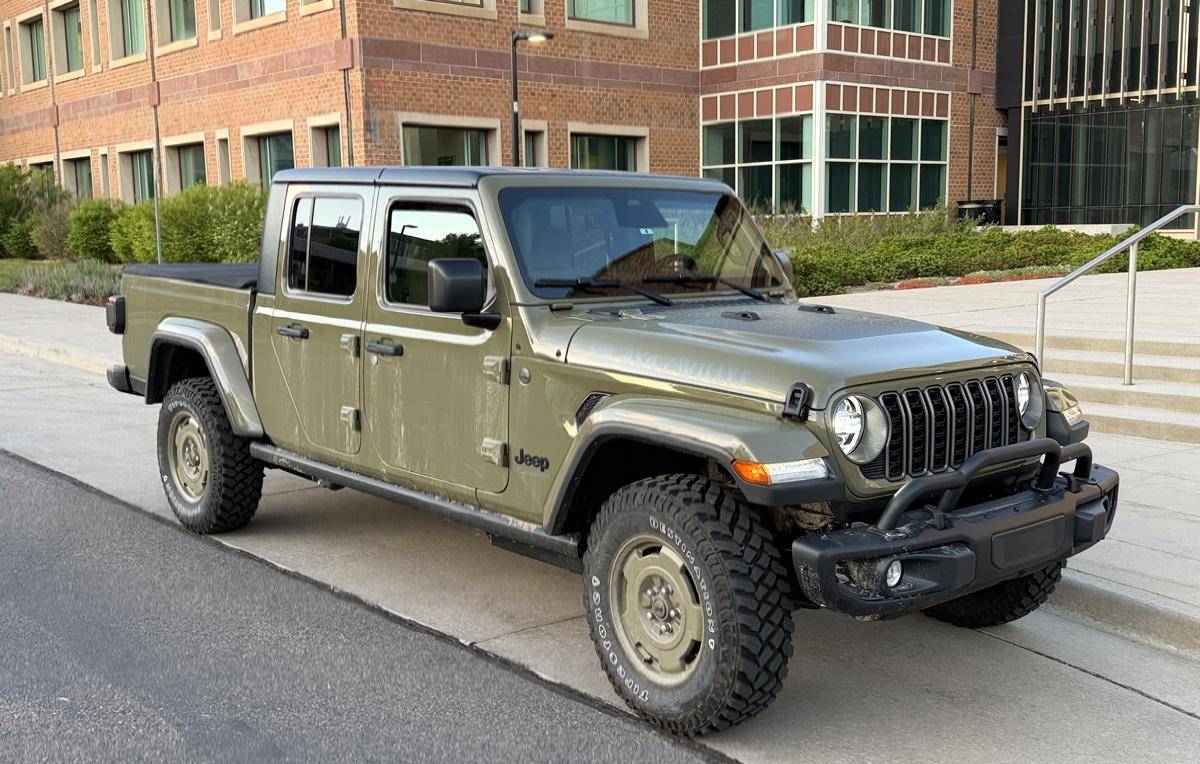
The Jeep story basically begins during World War II, in 1941, when a company called Willys-Overland started building a durable, lightweight military 4x4 for the U.S. Army. That tiny, rugged vehicle ended up becoming one of the most recognizable off-road machines ever made, and the foundation of the entire Jeep brand. The “Willys ’41” name on the special edition Gladiator I review is an homage to that history, right down to the military-inspired paint and stripped-down styling cues. Jeep has spent decades carefully polishing its military heritage - at least across parts of the lineup - and they have earned their strong brand loyalty the hard way.
The Gladiator itself occupies an interesting place in Jeep history because it's the company’s first modern pickup truck, even though the original Jeep Gladiator pickup dates back to 1962. The current-generation Gladiator arrived as part of the 2020 Jeep lineup and immediately carved out its own corner of the market. Part Wrangler, part midsize pickup, part rolling lifestyle accessory, Jeep owners absolutely adore these things. There is a level of brand loyalty within the Jeep world that borders on tribal identity. The 2026 Jeep Gladiator Willys ’41 4x4 leans hard into that culture, wrapping the already distinctive Gladiator in retro military nostalgia and enough personality that you expect it to come with a canteen, binoculars, and an "A" gas ration book.
Stellantis offered me a week of Jeep culture behind the wheel of the 2026 Jeep Gladiator Willys 41 4x4 in "41 Green", with a black / heritage / tan interior, featuring cloth seats:
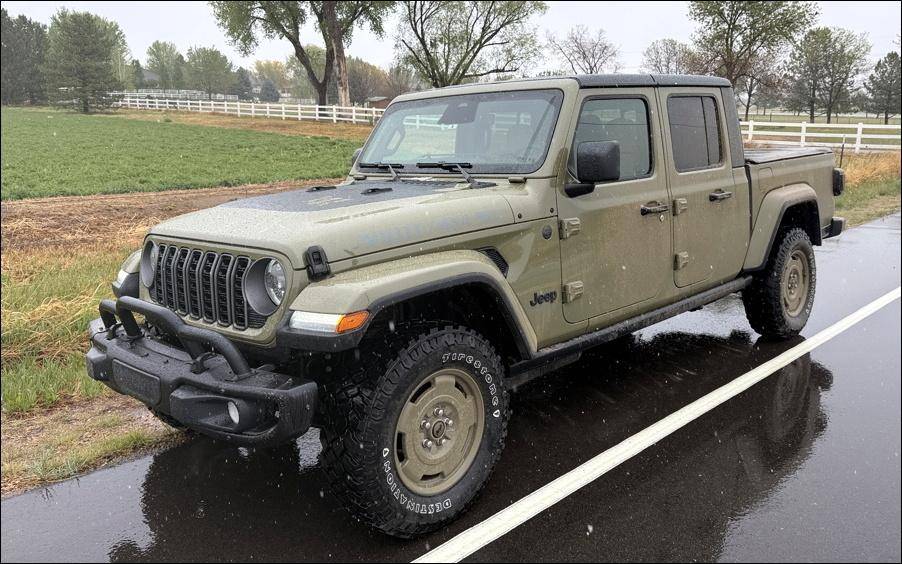
It has tons of curb appeal, from the retro wheels to the aggressive front bumper. It also has both doors and roof panels that can be popped off for that full, unhindered Jeep Wrangler-type experience, though I didn't remove any for my test drive. Take your hand and cover up the pickup truck bed, and you'll be looking at a Jeep Wrangler: This is clearly a Wrangler with a truck bed grafted onto the back. It's a midsize pickup:
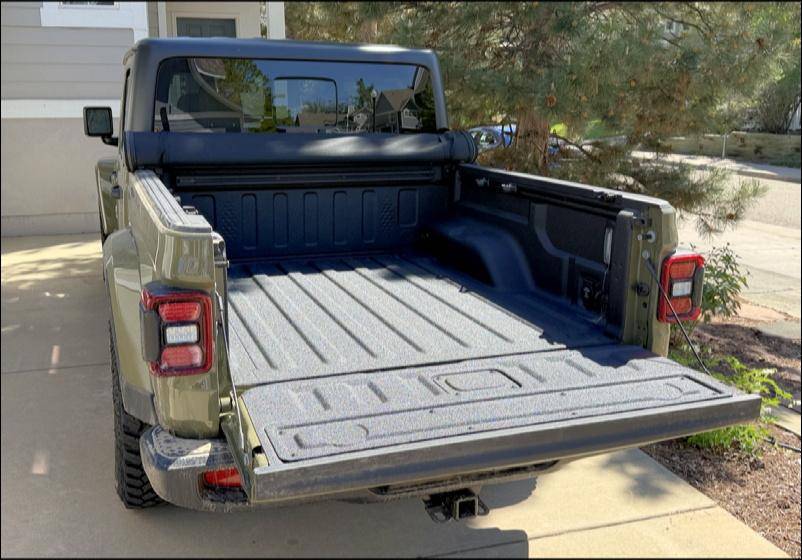
This model featured the Mopar spray-in bedliner, but why would you get a pickup truck and not add something to protect the bed if you're going to use it for actual cargo or gear? The Gladiator also had a very nice, secure roll-up tonneau cover that also meant you could pop the doors and panels, then slip them into the very back of the vehicle.
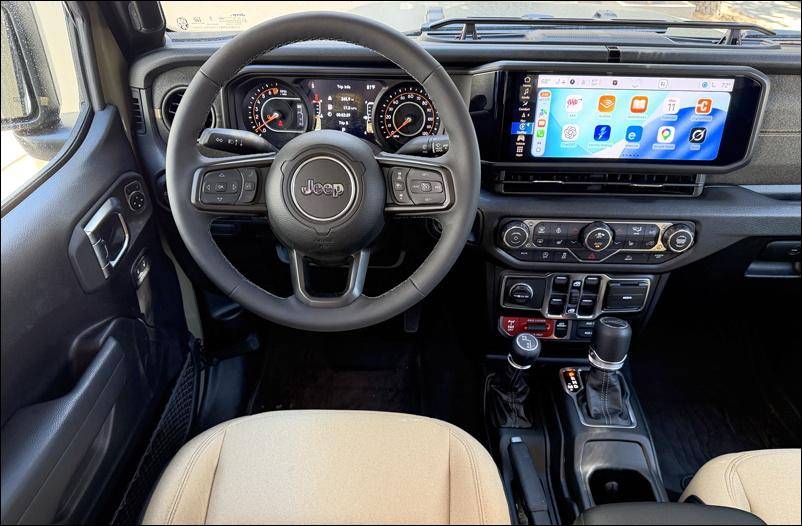
It's an attractive, albeit busy, dashboard design that's basically identical to the Wrangler itself, with much of the center controls dedicated to 4x4 modes and options (as is the second shifter). In an era where some manufacturers like Kia and Mazda are utilizing futuristic design themes, Jeep is resolutely sticking to its tried-and-true dashboard control configuration and features. This isn't a 1941 design, of course, because that'd have startlingly few controls - and features! - but it still feels like you're in a late 90's vehicle + infotainment screen.
Notice in the above photo the dash accessory rail at the top of the dashboard. Jeep enthusiasts might use this to corral their rubber ducks, but you can also clamp things like a phone holder onto it, too. It's a nice touch that more manufacturers should offer as an option.
Rubber ducks? If you're part of the Jeep community, you already know that the cool Jeep folk exchange rubber ducks - called "ducking" in the parlance - as a way of saying "hey, I like your Jeep". Keep an eye out, you'll see these dashboard duck armies on the dashboard of lots of Jeep Wranglers and Gladiators!
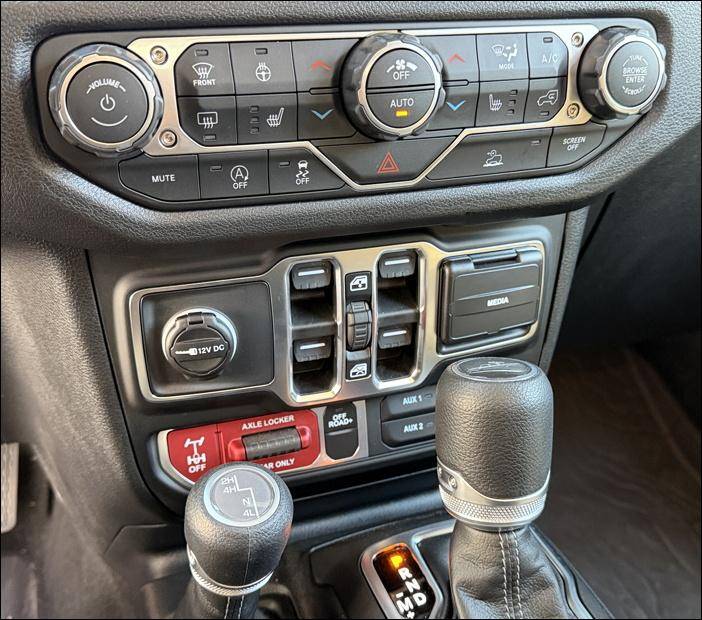
One design feature that takes a bit of getting used to is that the window controls are all located centrally on the front console: they're just below the hazards button in the above image. The climate controls, meanwhile, are standard Stellantis and can be found on lots of models across the company's many brands. Below the window controls are the 4x4 options and four unassigned AUX buttons - along with the 2H -> 4H -> 4L shifter. Next to it is the gear shift, which fits quite comfortably in the hand.
I did experience a bit of inclement weather and shifted into 4H, with some effort. They really don't want you to accidentally knock the shifter and change drive modes! Meanwhile, the "Pentastar" 3.6L V6 24V VVT engine and 8-speed automatic transmission delivered a somewhat underwhelming drive experience. Overall, I found the Gladiator is noisy (not surprising with removable doors and roof panels) and underpowered. Trying to keep up with the 80 mph highway traffic on one of the major Interstates in Colorado felt like work, rather than a smooth glide to the prevailing traffic speed.
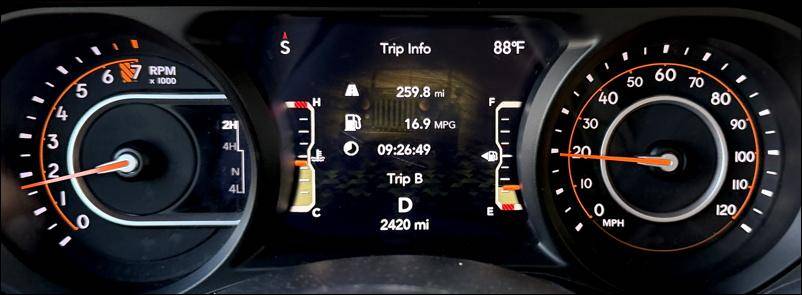
This main gauge display shows the fuel efficiency of the 2026 Gladiator, too: 16.9mpg. A bit lower than the 17/22 and average of 19mpg claimed by Jeep, but okay for a midsize pickup. It may surprise you that the original 1941 Jeep had an estimated fuel economy of 15-20 mpg under normal driving. Eighty-five years without a bump in fuel efficiency!
Notice also how the instrument cluster is busy! It's so busy that a number usually displayed - miles to empty - is shunted onto a specific center display view other than the trip data shown. In this instance, since you can go into 4x4, it's actually useful to have a tachometer, so I will skip my usual tirade against that being shown when the vehicle has an automatic, not manual transmission. 😉
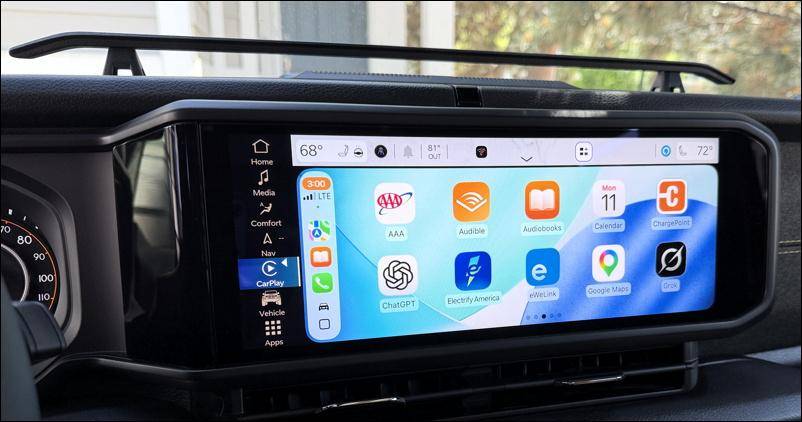
The infotainment system had the now-standard wireless Apple CarPlay and wireless Android Auto available. I always appreciate when the display includes space reserved by the manufacturer for controls outside the scope of those popular phone systems, as you can see with the button column on the left edge.
It worked great, until it didn't...
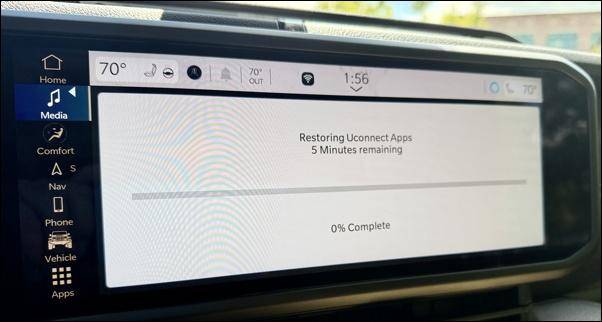
For no apparent reason, I started the Gladiator one morning, and it got stuck booting up. Next time I started the car, it indicated a catastrophic failure and claimed it needed to reload all of the apps, which it proceeded to spend the next few hours trying to accomplish. I spent a lot of time looking at the above screen with "0% Complete". The next day, however, it started up fine, remembered my phone connection, and I was back in action. But for an entire day, it was trying to fix things. It's hard to say how common this is, but it was a first with the 100+ cars I've evaluated and would have been uber-frustrating if it happened on a day I'd planned for some long-distance driving.
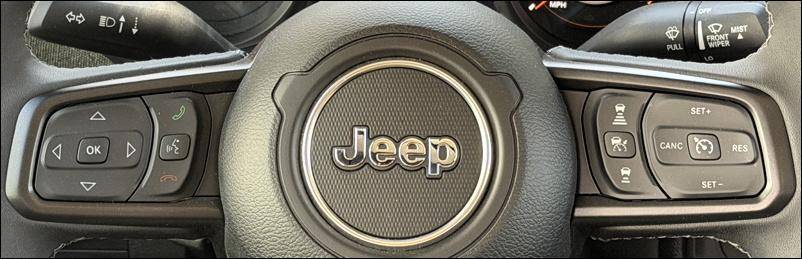
The steering wheel controls were nicely symmetric and easy to work with, though volume and track controls are on the back of the steering wheel crossbar, a design I really dislike. Fortunately, the volume knob is easily accessible on the dashboard. With the Willys 41 design, I really wish they had opted to use the historical Jeep logo on the center control, but, alas, it's just standard Jeep branding. Mopar? Seems like a great aftermarket accessory!
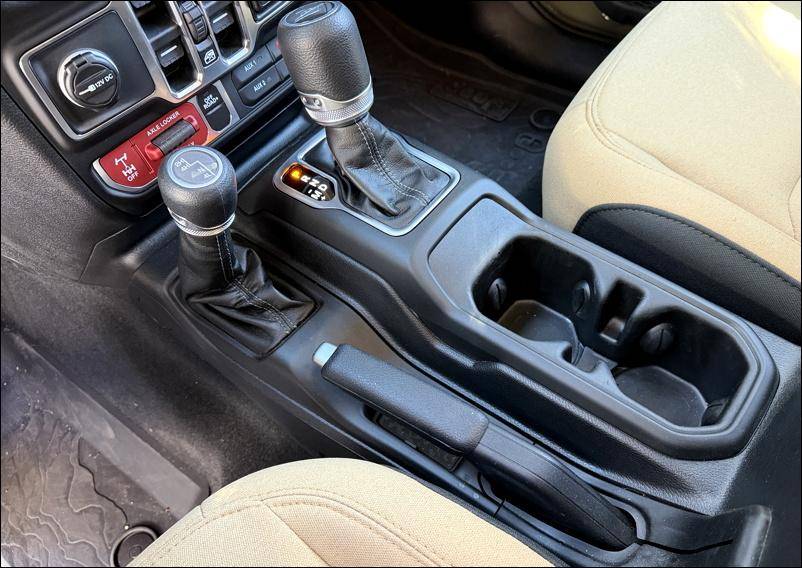
Finally, here's the center console. A very nice, if unexciting design. Note the slot between the cup holders; this model Gladiator did not have a Qi wireless charging option, so that's presumably where you should be stashing your phone while you drive. It worked, and there are USB plugs just behind the "Media" flap on the dash, along with more in the armrest compartment, but still, where's the tech coolness factor?
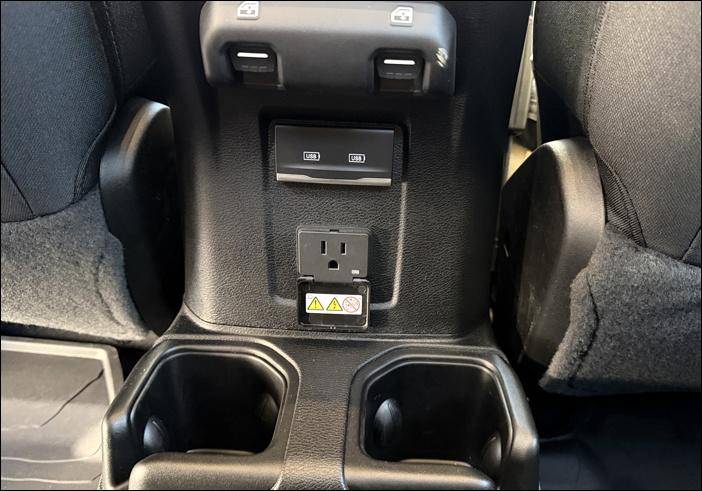
Moving into the rear, the Gladiator had one of the best rear passenger consoles I've seen, with two deep cup holders, USB-C (behind the flap), a 110V plug, and, at the top, window controls. No climate controls, however, but buck up, soldier! You're not in the back for a namby-pamby comfortable ride to the spa!
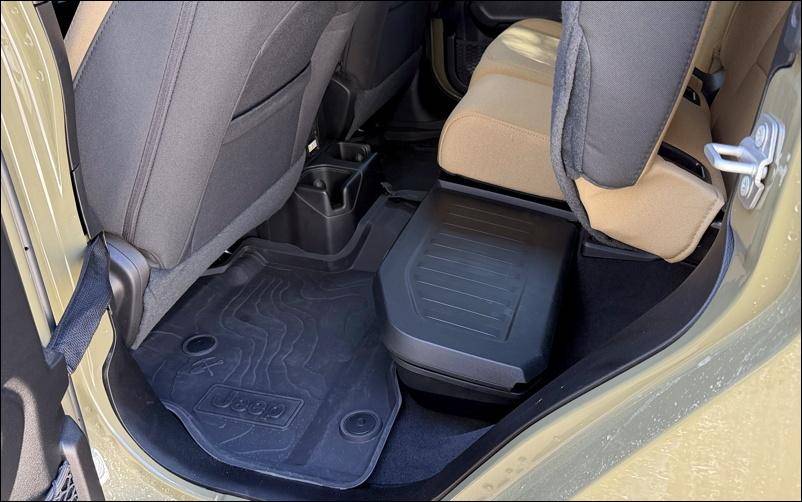
The rear seats quite easily flipped up for storage (and there's a locking hidden storage compartment in the back too), which I liked. Not a ton of room, but entirely functional, particularly for younger members of the family.
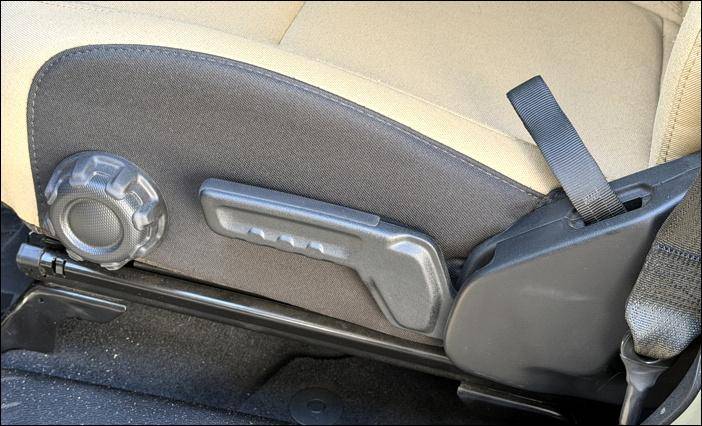
Finally, for a vehicle that's going to cost over $60,000 out the door, I was startled by the lack of modern controls on the seat. I found the driver's seat located high up in the cab, and not particularly comfortable. With one of my passengers, I had to get out, go around, and adjust their seat for them.
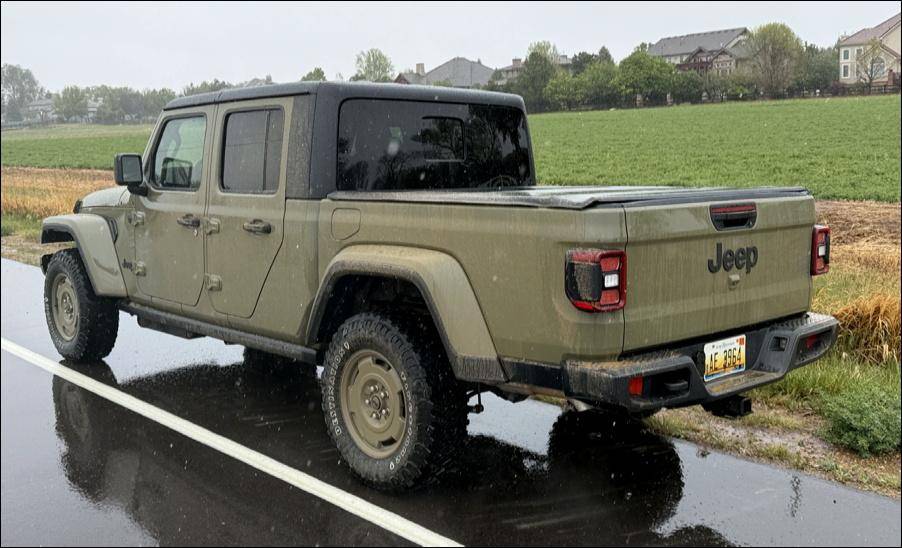
I had a mixed experience with this 2026 Jeep Gladiator. I love the retro styling - those wheels are killer! - and the sense of history of the Willys 41, and gradually appreciated the addition of the pickup truck bed from a utility perspective. But there were a lot of hiccups too, from the seat being endlessly uncomfortable and quite high up to the infotainment system tossing bits for an entire day. The drive experience was similar to the Wrangler, and I would love to try a hybrid or 4xe edition of the Gladiator if that ever came out, but the hot buzz is that the idea came and went at Stellantis.
As is, this is a vehicle that Jeep enthusiasts are going to absolutely love but if you're not in that group, you might want to add some of the other options in the 4x4 midsize pickup space to your shopping list.
2026 Jeep Gladiator Willys 41 4x4, with 3.6L V6 engine and 8-speed automatic. BASE PRICE: $39,820. Options included: '41 Exterior Paint, Customer Preferred Package 24T, Body-Color Fender Flares, Convenience Group, Technology Group, Multi-Function Accessory Rail, Black "Freedom Top" 3-piece hard top, Alpine Premium Audio, Spray-In Bed Liner. AS DRIVEN: $58,160.
Disclosure: Stellantis loaned me the Jeep Gladiator for a week in return for this candid write-up. This article originally appeared on PlanetDave.com with the title 2026 Jeep Gladiator Willys 41 4x4: A Jeep for Jeep Lovers and is republished with the permission of the author.
Hey Dave Taylor wants you to share this!