Subaru has quietly built one of the strongest brand identities in the automotive world since its launch in the late 1950s. While other manufacturers chase horsepower, luxury, or the latest design trends, Subaru has focused on capability, practicality, and the outdoors. The Subaru Outback has become the centerpiece of that strategy. For millions of happy owners, it’s the preferred choice for road trips, camping, ski vacations, and the daily commute in between. The Outback isn’t just Subaru’s best-known model. It’s the vehicle that defines the company.
Not every design decision has been a home run, however. The previous-generation Outback (model years 2020-2025) moved many everyday controls, including much of the climate system, onto a large vertical touchscreen. It looked futuristic, but many owners found it slower and more distracting than the buttons and knobs it replaced. Subaru took owner interface criticism to heart, and the 2026 Outback is a fairly major redesign. It restores physical climate controls, introduces a much better infotainment system, and adds dozens of smaller usability improvements throughout the cabin. But I found that it added some new quirks and problems. Sometimes the smartest innovation is recognizing that the old solution was actually the better one, but ya gotta get the details right too.
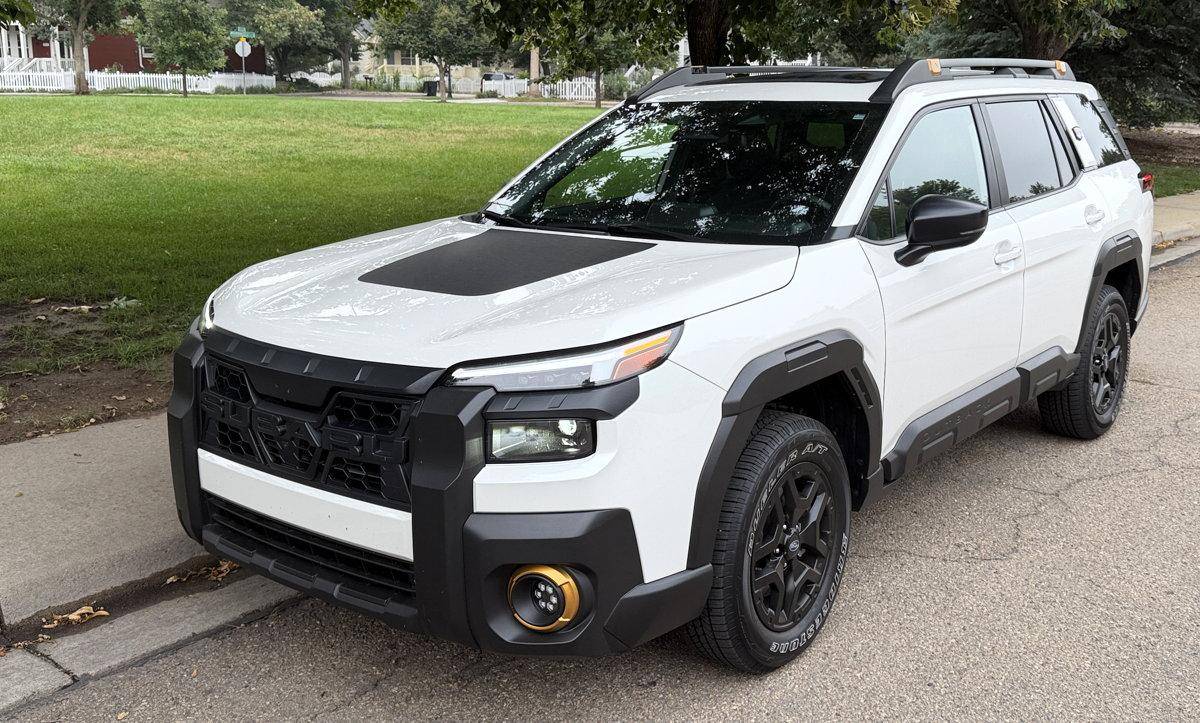
Well, we'll get to the pros and cons. To begin, when Subaru offered me a 2026 Subaru Outback Wilderness trim package, I was psyched to drive it for a week through Colorado. Mountains, rural highways, suburbs, and the city. Here's what showed up, in Crystal White Pearl:
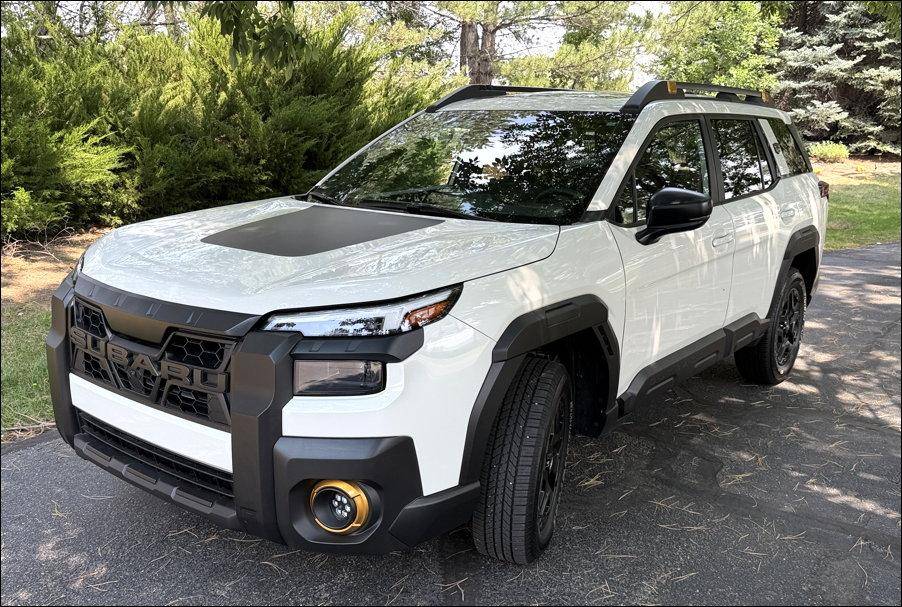
It's boxier than the previous generations - one of the main complaints people have about this redesign - but as an SUV driver, I found it to be quite attractive, with its rugged trim and accents. The copper-colored elements really pop in person too, particularly on the rear cargo door (pictured later in the article). The black portion on the hood also does a nice job of giving it a Range Rover-esque appearance, and the black panels on the bottom of the doors will undoubtedly help avoid door dings.
In terms of the drivetrain, this vehicle is powered by a 2.4L DOHC Turbo Subaru BOXER engine with auto start/stop and a continuously variable transmission (CVT) that sidesteps individual gears. Driving it was smooth, but I found it underpowered in situations that required more aggressive acceleration, like merging onto the highway. It gets to the speed you want, just more slowly than I prefer. Of course, this isn't the WRX, so it's intended to be more off-road capable with a nimble suspension system and high ground clearance (a decent 9.5 inches). The drive is stiff despite its new electronically controlled dampers, but not unpleasantly so, and I found longer drives comfortable.
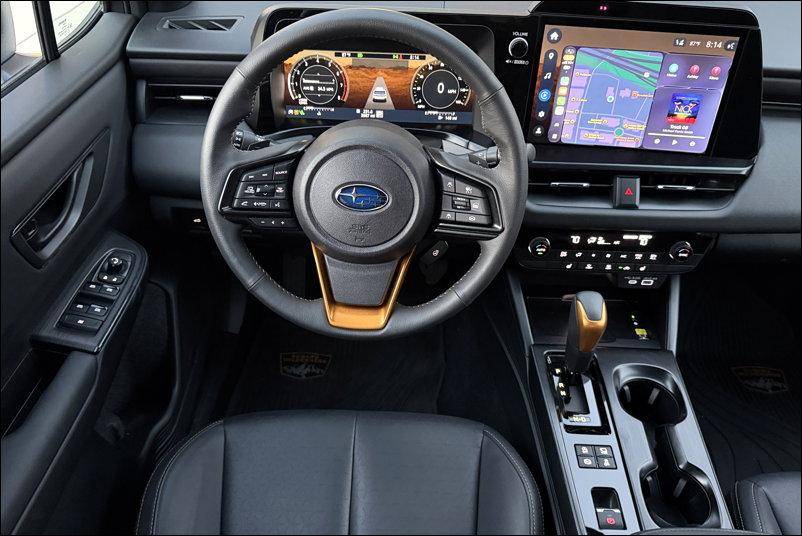
The interior is an attractive modern blend of old-school (like an actual gear shift) and new (the impressive 12.1" infotainment display coupled with the 12.3" instrument cluster). This is also where those copper trim pieces add a nice design sense to the interior. The orange terrain in the background of the instrument cluster - I think it looks like the surface of Mars! - is what's displayed on both screens when the vehicle detects the key but hasn't been started, and it's a very nice effect that I suspect many owners secretly love.
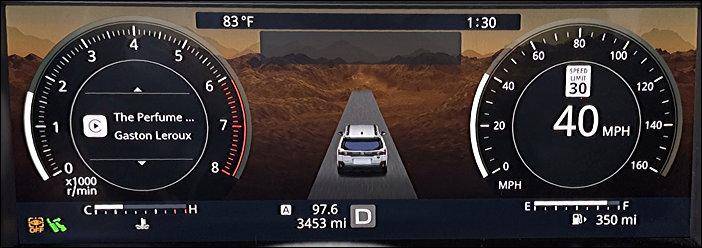
You can see it more clearly in this close-up of the instrument cluster. It’s definitely futuristic, even if Subaru has succumbed to the same curious choice as many CVT manufacturers by prominently displaying a tachometer. There aren’t conventional gears, though the paddle shifters let you step through eight programmed ratios when you want more control. Whether many Outback owners will actually use them is another question.
This image highlights one of the problems I had with the Outback Wilderness tech; its speed limit sign detection system was buggy. When I took this photo, I was in a 50 mph zone. Google Maps on the infotainment screen had caught the change and showed that as the correct speed limit, but the Outback stubbornly stuck with 30 mph even though it had a clear view of the speed limit sign as I passed it. This leads to a curious question: in a self-driving vehicle, what happens if it misunderstands or completely misses a speed limit sign? Would you end up poking along at 30mph in a 50mph zone?
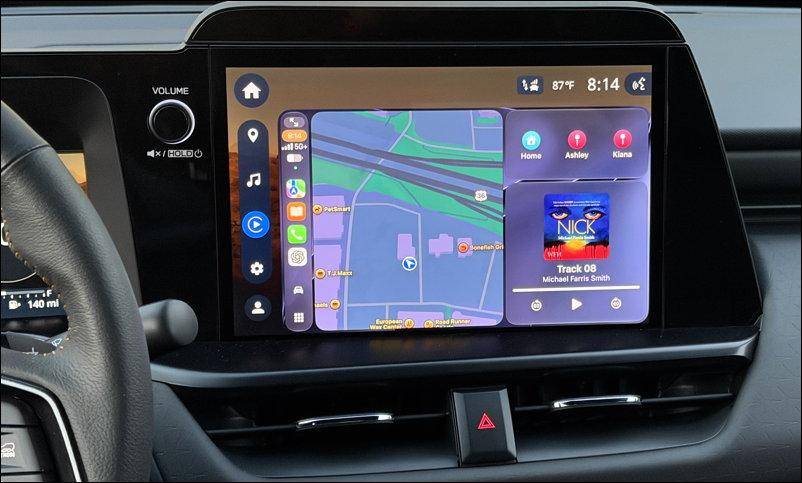
The infotainment screen is delightfully big, almost the size of my MacBook Air, and it’s nicely laid out with that red terrain peeking from the background. Subaru supports both wireless Apple CarPlay and Android Auto, though my experience with CarPlay was mixed. Twice it forgot my iPhone mid-drive and wouldn’t reconnect until I pulled over and restarted the vehicle. More annoyingly, throughout my week the audio would occasionally switch to the rear left speaker only, then, after a few seconds, return to all four speakers. My guess is that it was muting for an alert, but there was never anything shown that could account for the oddity, either on my iPhone 17 Pro or the vehicle.
This is a new version of the infotainment system for 2026 (Subaru refers to it as an "all-new 12.1-inch Subaru Multimedia System" in its literature), so these are just some bugs to work out. Hopefully Subaru can address these issues with a software update.
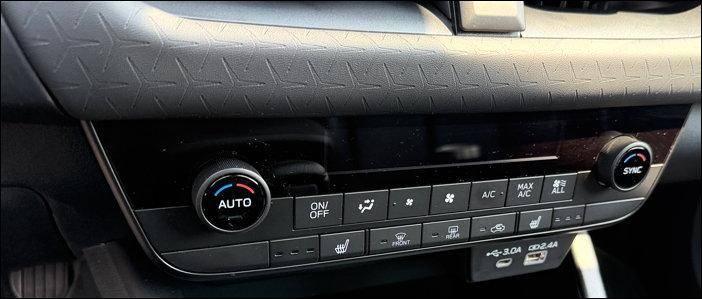
Perhaps the most heartening of all design changes is the restored physical buttons of the climate control system. It's a classic interface that I found quite easy to use, and while I'm a tech guy, I too appreciate physical controls with their kinesthetic appeal and feedback. Also note the tri-star pattern on the dash, a nod to the stars in the Subaru logo!
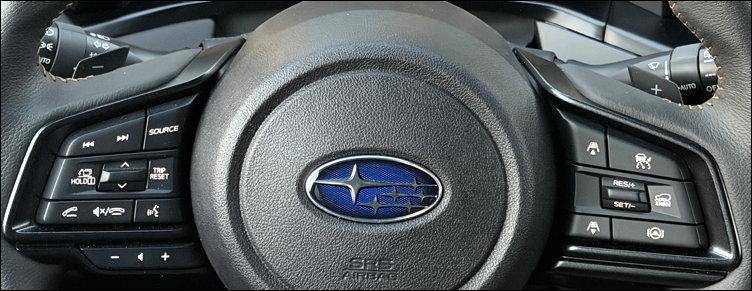
The steering wheel is heavy with buttons and controls, but nicely symmetric and generally easy to figure out. Can you see the paddle shifters peeking over the steering wheel control bar? Yes, it's a CVT with paddle shifters. Hmmm...
We should talk about fuel efficiency because I found it rather disappointing for a vehicle of this size. It's EPA-rated at 21 mpg city and 27 mpg highway, and I saw around 23.5 mpg with my varied driving. Acceptable, but it'd sure be nice if Subaru squeezed another 5-10 mpg out of this 2.4L engine...
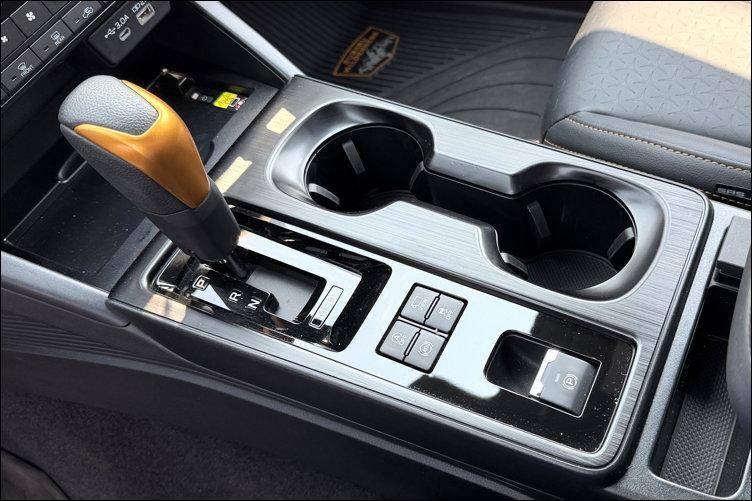
The center console is a clean, elegant design, with a great wireless charging pad in front (behind the gearshift in the photo), two centrally located cup holders, and another small storage space perfect for tollway change. The camera view button was particularly helpful as I like to use its 360º 'overhead' Surround View Monitor when parking, and it's nice not to hunt for the option.
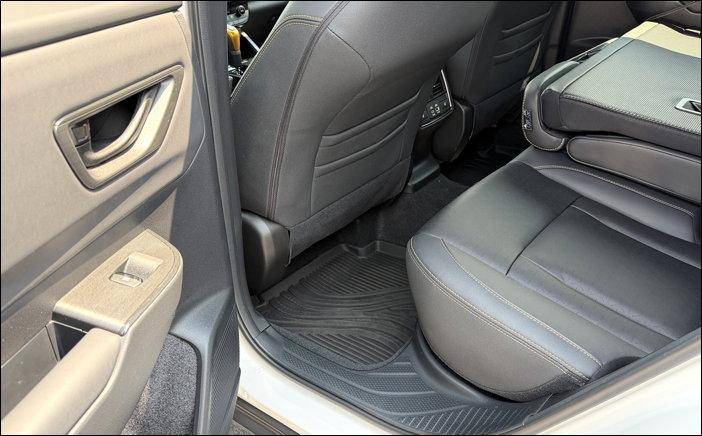
I found that there wasn't a lot of legroom, which has always been my experience with Outbacks. Sure, you can move the front seat forward, but then the driver or front passenger is uncomfortable so that the rear passengers have more space. This is a standard trade-off with every vehicle, of course. Speaking of front seats, however, I was startled to realize that the $48K Wilderness I was driving had a manual seat for the front passenger; only the driver got a power seat.
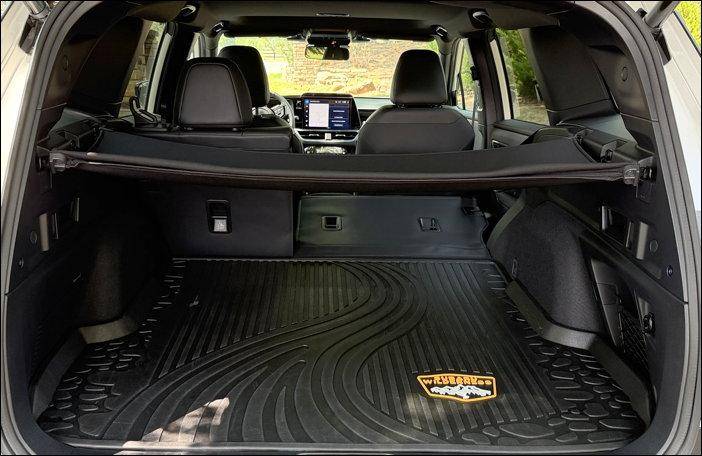
Cargo space was solid, and it's nice that the Wilderness trim level includes these excellent all-weather floor mats (seriously, this is the coolest mat I've ever seen in a vehicle) and the soft cloth cargo cover. Notice the 60/40 rear seat too.
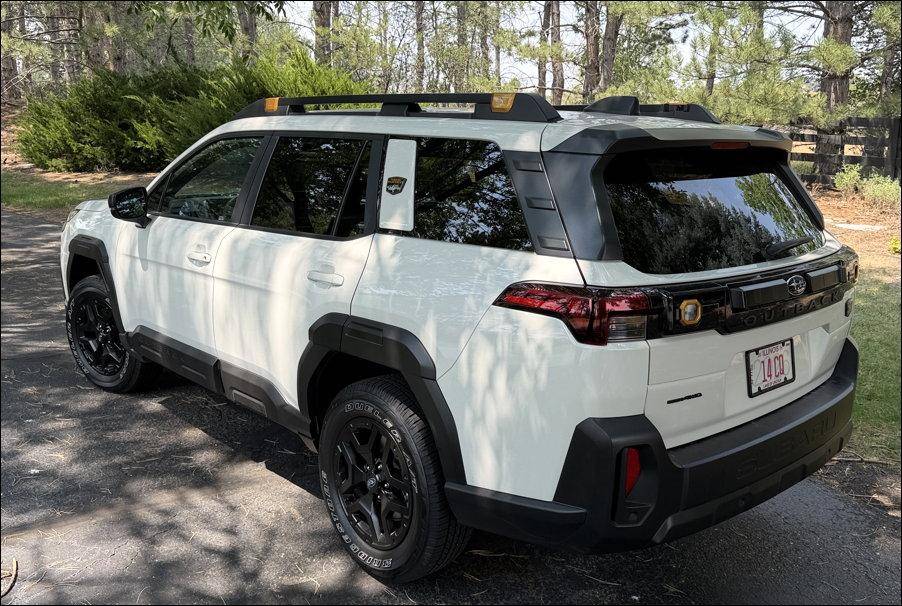
This rear view highlights another complaint that some Subaru loyalists have with this 2026 redesign: that it's more boxy than previous generations. It's a very attractive SUV, but it is moving into a more generic profile that is more likely to blend in with the million other midsize SUVs on the road today.
Overall, there's a lot I liked about the 2026 Subaru Outback Wilderness, though I feel there are some bugs that need to be worked out with the infotainment system, and that engine could do with an upgrade. Maybe a hybrid that could offer more power and better fuel efficiency? Indeed, it's a puzzle that there's no hybrid option in the Outback lineup. If you're a Subaru fan, this could be a strong upgrade, especially if you're in the immediately previous model that lacks the physical climate control buttons. Otherwise, it's definitely worth checking out - Subaru really does know off-road and bad weather driving - but perhaps in the Touring XT trim package.
2026 Subaru Outback Wilderness, powered by a 2.4L DOHC Turbo Subaru BOXER engine and CVT. BASE PRICE: $44,995.00. Options included: Package 22, including 12.1" multimedia infotainment system with navigation, power moonroof, and surround view monitor system. AS DRIVEN: $48,490.00.
Disclosure: Subaru loaned me the Outback Wilderness for a week in return for this candid write-up. This article originally appeared on PlanetDave.com with the title The 2026 Subaru Outback Wilderness Fixes a Lot, But... and is republished with permission of the author.
Hey Dave Taylor wants you to share this!