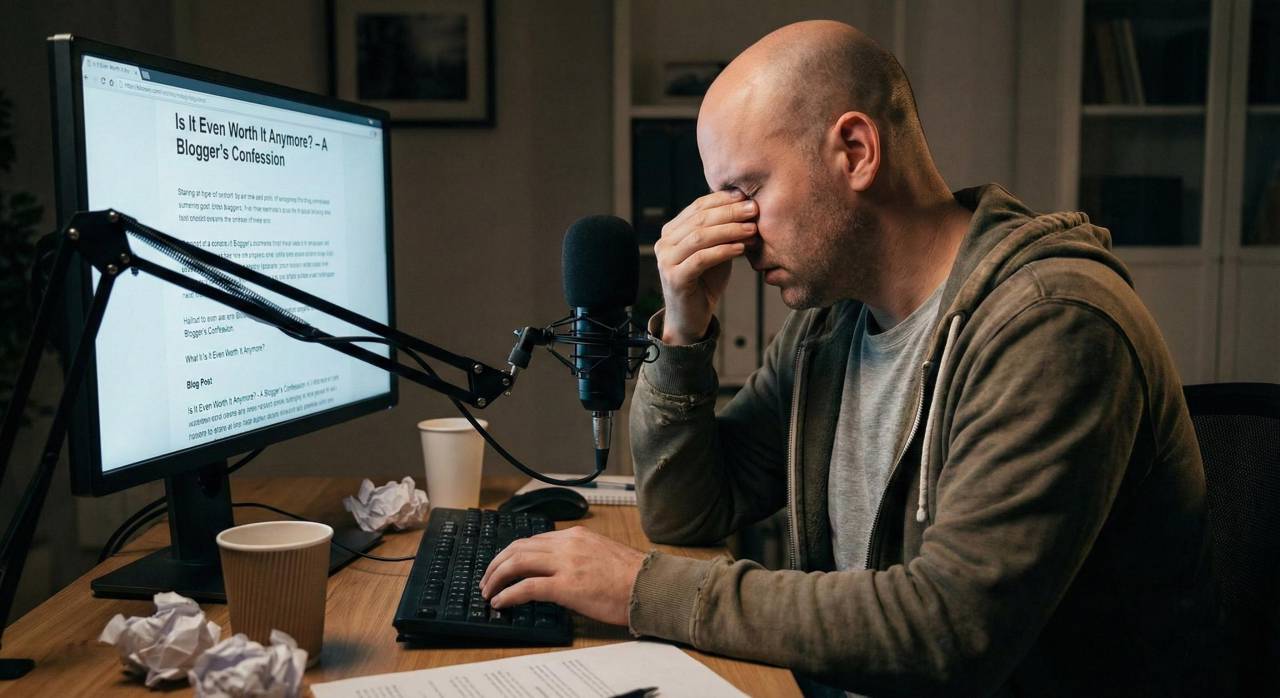
The hardest creative moments aren't when you lack ideas - they're when you question whether your ideas even matter. That tension between professional obligation and personal conscience is hitting creators harder than ever, and the honest voices talking about it are the ones worth hearing.
I came across Joe's piece on Joe's Daily and it sparked some thinking about the specific flavor of creative struggle that hits when external chaos collides with professional consistency. His perspective on feeling "fake" while reviewing products during widespread hardship resonated because I've watched creators either power through with forced cheerfulness or disappear entirely - neither approach serves them or their audience. But it also raised questions about what sustainable creation looks like when the discomfort isn't temporary.
Naming the Conflict That Freezes Creative Output
Joe captures something precise: "It's a mix of burnout, grief, anger, and this quiet discomfort that keeps asking whether the kind of content I've always made still fits the moment we're living in." This identifies the real blocker - not exhaustion, but misalignment. Traditional burnout responds to rest. This responds to reckoning.
The creators I've seen navigate this successfully don't wait for the world to stabilize. They narrow their focus to what still feels true. That might mean one format instead of five. One topic instead of ten. The goal shifts from maintaining output to maintaining integrity - and paradoxically, that constraint often restarts the creative engine faster than forced productivity.
Why Writing Survives When Everything Else Stalls
Joe notes that writing remains his one reliable outlet even as filming and reviewing have paused. This pattern shows up consistently among creators facing values-based resistance. Writing requires less performance. You're not managing lighting, energy, or on-camera presence - you're just thinking on the page.
Use this. When creative paralysis hits, default to the lowest-friction format available. Write the post you'd never publish. Draft the honest version before the polished one. The act of articulating discomfort often reveals what you actually want to say next - and sometimes that draft becomes the content that resonates most.
The Financial Pressure That Doesn't Wait for Resolution
"This is still my job. I still need to make money. That pressure doesn't disappear just because the world feels like it's unraveling." Joe's acknowledgment here matters because most vulnerability posts skip this part. The rent is due whether or not you've resolved your creative crisis.
The practical path forward separates survival content from soul content. Identify the minimum viable output that keeps income flowing - the sponsored post, the affiliate roundup, the evergreen update. Protect that baseline. Then treat everything else as optional until your creative compass recalibrates. This isn't selling out. It's buying yourself the time to figure out what showing up authentically actually looks like now.
Starting From Attention Instead of Answers
Joe closes with something worth sitting with: "If you're feeling the same tension - wanting to create, but unsure how to do it responsibly or honestly - you're not broken. You're paying attention."
That attention is the raw material. Creators who channel discomfort into documentation - even messy, uncertain documentation like Joe's post - often find their way back to purpose faster than those who wait for clarity before speaking. The audience you've built can handle your questions. What they can't connect with is silence disguised as strategy.
Hey James Hills wants you to share this!