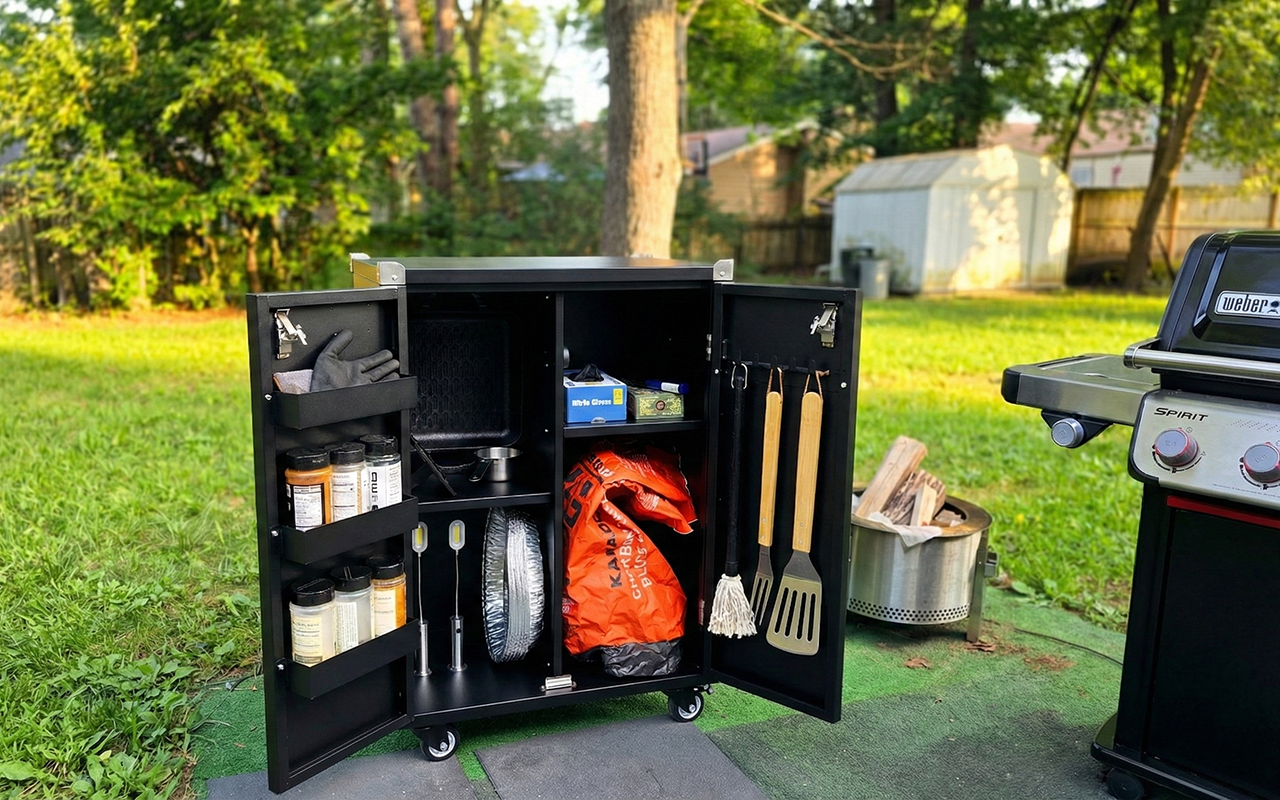
GrillBox 2.0 Review: Solid Build, Assembly Frustrations, and Why I Still Recommend It
The GrillBox 2.0 keeps grilling gear organized and protected year-round. 18-gauge steel construction, adjustable storage, and 360-degree wheels. Honest take on assembly and pricing considerations.
View Details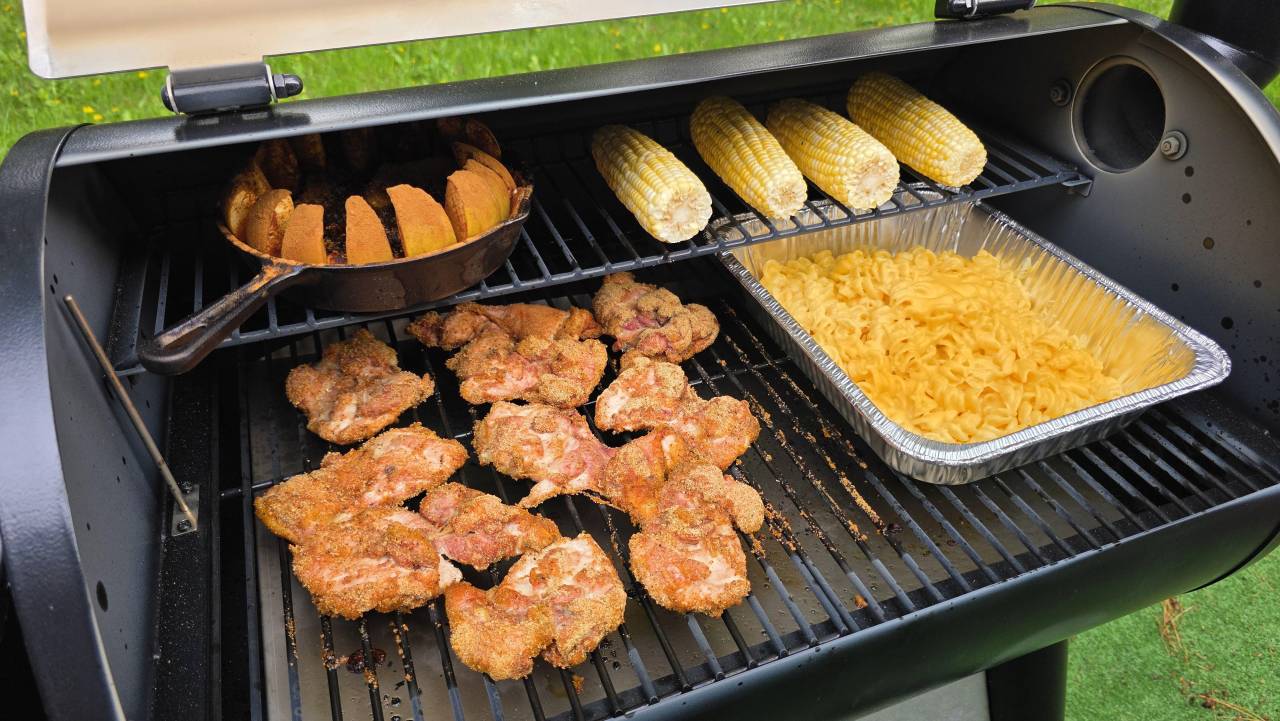
Finding Your Flame: Every Man's Guide to Mastering Different Grill Types
Explore the ultimate backyard grilling guide comparing gas, charcoal, pellet, and wood grills. Learn which type suits your cooking style, maintenance preferences, and flavor profile desires for creati
View Details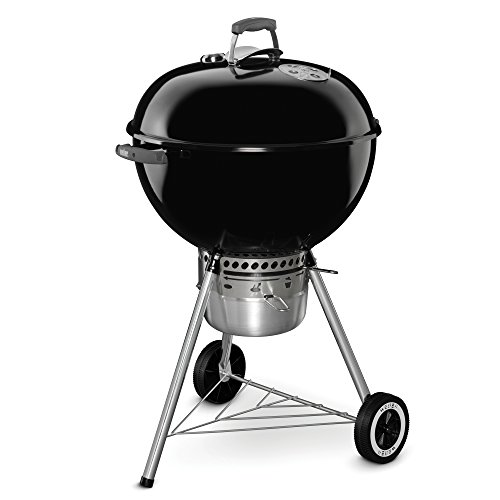
Weber Original Kettle Premium Charcoal Grill, 22-Inch
Holds up to 13 burgers made with a Weber burger press One-Touch cleaning system with high-capacity ash catcher provides hassle-free ash cleanup Porcelain-enameled lid and bowl retain heat, and won’t rust or peel Use the lid hook to avoid placing the lid on the ground while grilling Cooking grate is hinged for easily adding charcoal while grilling
View DetailsSponsored
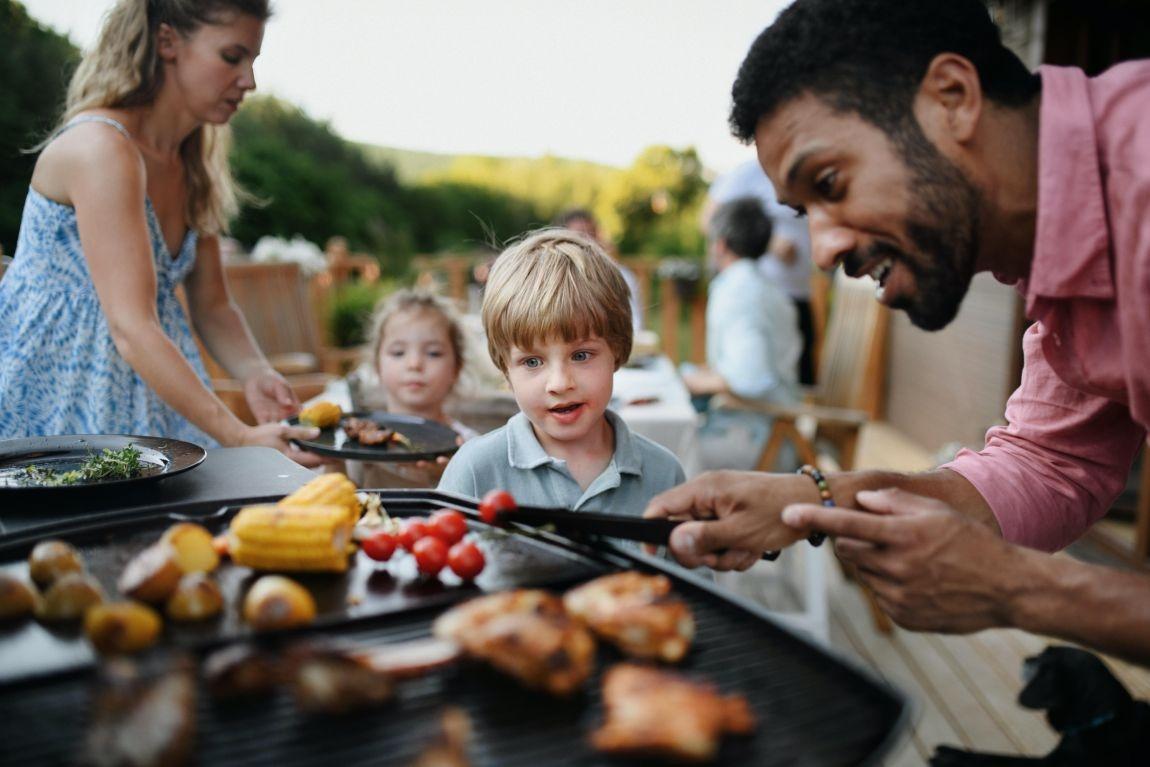
When I found myself setting up at my father-in-law's place, one of the first things I bought was a grill. I grill several times a week now, and it's become the cooking method I reach for first - you're outside, the cleanup is minimal, and kids can be part of the process without standing next to a hot stove. But here's what I didn't think about until I looked at the data: a backyard grill sends about 22,000 people to the emergency room every year, and kids under five account for almost half of all contact burns. Every one of those incidents is preventable with a little planning.
Set Up a Grill Zone Before You Light Anything
The most effective safety measure isn't a rule - it's a physical space. Before you fire up the grill, establish a clear perimeter that kids can see. Chalk on the patio works. A row of pavers works. Even a strip of painter's tape on the deck works. The CDC recommends at least 3 feet of clearance around the grill for people, and the National Fire Protection Association recommends keeping the grill at least 10 feet from any structure, including the house, deck railings, and overhanging branches.
Make the zone visible and explain it once. Kids respond to boundaries they can see better than instructions they have to remember. "Stay outside the chalk line" is clearer than "don't go near the grill." If a kid crosses the line, stop what you're doing and reset the boundary. Consistency matters more than the first explanation.
What Kids Can Help With at Each Age
Ages 3-5: Washing vegetables, tearing lettuce for salads, carrying plastic plates to the table, and picking out their own toppings. They can watch the grill from outside the safety zone and help with the countdown timer. Keep them involved but physically separated from the heat.
Ages 6-9: Seasoning meat with rubs and marinades, assembling kebab skewers (use flat wooden skewers, not metal), mixing sauces, and setting up the outdoor table. With you standing between them and the hottest section of the grate, they can learn to use long-handled tongs to move items on a cooler zone. This is the age where they start understanding cause and effect with heat.
Ages 10+: Older kids can learn to manage the grill directly - adjusting burner temperatures, flipping burgers, checking internal temperatures with a meat thermometer. Show them how to check for doneness, explain why chicken needs 165°F internal and burgers need 160°F, and let them take ownership of a section of the grate. Tie back long hair, skip the loose sleeves, and make sure they're wearing close-toed shoes.
Long-Handled Tools, Thermometers, and the Wire Brush Problem
- A fire extinguisher within arm's reach - not in the garage, not in the kitchen. Right next to the grill. A 5-lb ABC-rated extinguisher covers grease fires, which are the most common grill fire type.
- Long-handled tools only - short spatulas and tongs put your hands too close to the heat. This matters more when you're teaching a kid to flip something.
- A nylon grill brush or aluminum foil ball - wire brushes shed bristles that end up in food and cause internal injuries. The CDC's grilling safety guide recommends against wire brushes entirely.
- A meat thermometer - not optional. Poultry to 165°F, ground beef to 160°F, pork to 145°F. Teach kids to check temps instead of guessing by color.
- Close-toed shoes for everyone near the grill - hot coals and dripping grease don't mix with sandals.
- Basic burn supplies nearby - cool running water, antibiotic ointment, non-stick bandages. Know your closest urgent care location before you need it.
The NFPA and CPSC Numbers Behind Grill Safety
I grill several times a week and I'm not planning to stop. But the data from the NFPA and Consumer Product Safety Commission changed how I set up, and it should change how you set up too.
- An average of 11,421 home fires involving grills are reported each year in the U.S., causing an estimated $118 million in property damage annually
- Gas and charcoal grills account for an average of 10 deaths and 100 injuries annually from fire or explosion
- July is the peak month for grill fires (16% of all incidents), followed by June (14%), May (12%), and August (11%)
- Between 2017 and 2021, an average of 22,155 people per year visited emergency rooms for grill-related injuries
- Almost half of those injuries (47%) were thermal burns - and children under five accounted for 46% of contact-type burns. These happened when a child bumped into, touched, or fell onto the grill, its parts, or hot coals
- Gas grill fires are most commonly caused by leaks or breaks - check your connections at the start of every season
The pattern is clear: most grill injuries happen because of proximity, not because someone was doing something reckless. A kid trips near a hot grill. A toddler touches a grate that's been cooling for 20 minutes but is still hot enough to burn. The safety zone and the cool-down awareness are the two things that prevent most of these.
Smoke, Charring, and What the Research Shows About Cancer Risk
Inhaling smoke from burning charcoal or wood exposes you to carcinogens - polycyclic aromatic hydrocarbons (PAHs) and volatile organic compounds (VOCs). Overcooking meat produces heterocyclic amines (HCAs). The CDC recommends pre-cooking meats in the oven or microwave before finishing on the grill - this reduces total grill time and charring. Marinating meat before cooking reduces HCA formation. Trim excess fat to reduce flare-ups, which cause the most direct smoke exposure. And avoid eating heavily charred sections - cut them off instead of powering through them.
After the Food Comes Off: The Cool-Down Hazard
Most dads clean up the food and walk away. The grill stays hot. A charcoal grill holds dangerous temperatures for over an hour after the last coal goes gray. Gas grill grates stay hot enough to burn skin for 30+ minutes after you shut off the burners. And if you dump coals into a metal bucket or onto the ground, those stay hot even longer.
Keep the safety zone active until the grill is fully cooled - not just until the food is served. If the grill is in a spot where kids play after dark, this matters even more. A 9 PM marshmallow run shouldn't end with a trip to urgent care because someone forgot the coals are still 400°F in the fire pit.
Grilling Safety Checklist
Run through this before every cookout:
- Grill is at least 10 feet from the house and any structure
- Safety zone marked and explained to kids
- Fire extinguisher within arm's reach (not in the garage)
- Gas connections checked for leaks (soapy water test at start of season)
- Grill cleaned with a non-wire brush
- Meat thermometer on the prep table
- Long-handled tools only
- Close-toed shoes on everyone near the grill
- Raw and cooked meat on separate plates
- Kids assigned age-appropriate jobs (not just told to stay away)
- Burn supplies within reach (cool water, ointment, bandages)
- Cool-down plan: grill stays in the safety zone until fully cooled - at least 1 hour for charcoal, 30 minutes for gas
The Weber Spirit EP-435: A Grill Built for Families
If you're shopping for a grill that fits a family setup, the Weber Spirit EP-435 is worth a look. The four-burner layout gives you enough space to keep a cooler zone on one side - useful when you're teaching a kid to work the grate without putting them directly over the hottest section. The built-in thermometer and grease management system reduce two of the most common safety issues: temperature guessing and flare-ups from grease buildup. It's the kind of grill that grows with a family rather than something that gets replaced in two years.
The Grill Is a Classroom
A four-year-old who washes the corn and watches from behind the chalk line learns that fire is a tool, not a toy. A ten-year-old who checks the internal temp on a chicken breast and calls it done at 165°F is building confidence that carries into the kitchen. Run through the checklist, keep the safety zone active until the grill is cold, and let kids do real work at their level. That's how grilling becomes something you do together instead of something they watch from the window.
Hey James Hills wants you to share this!