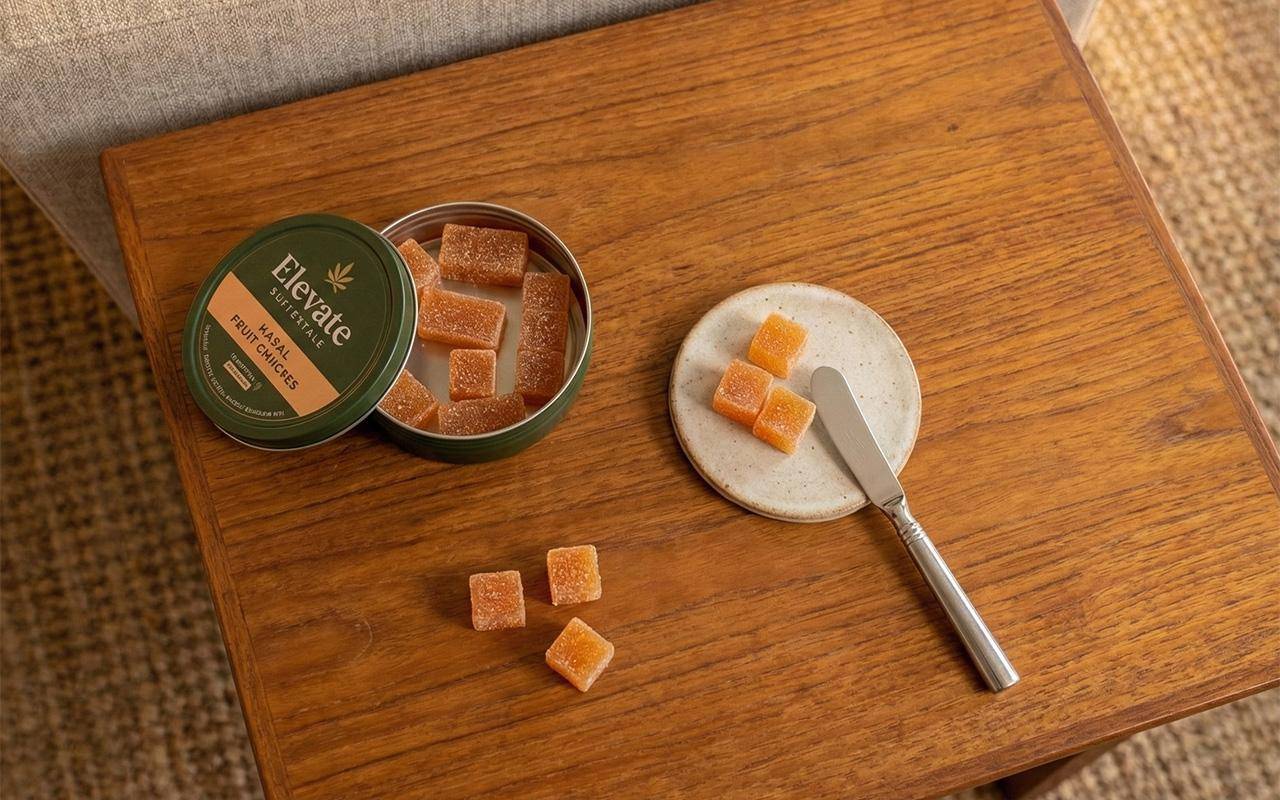
I know guys in their early career who are quietly taking small amounts of cannabis gummies before a big presentation - not to get high, but to take the edge off without the bourbon. I know married guys who swear a microdose of THC on Saturday morning makes them a better dad. And every few months, someone in professional circles mentions psilocybin the same way people used to mention intermittent fasting - like a productivity secret they've just discovered. Microdosing has moved from fringe science to something your neighbor might be doing. Before you dismiss it or dive in, here's what the research actually shows.
Microdosing Started With A Swiss Chemist
In 1943, a Swiss chemist named Albert Hofmann accidentally absorbed a small amount of a compound he'd synthesized and went home from his Basel laboratory feeling unusually lucid and restless. That compound was lysergic acid diethylamide - LSD. The full-dose discovery is well documented. Less discussed is what Hofmann did for the last decades of his very long life: he took tiny amounts, sub-perceptual doses, and believed they sharpened his mind well into old age. He lived to 102.
Beyond Detroit: Best Places In Michigan For A Guys Trip
Discover Michigan's best guys trip destinations, from Grand Rapids' brewery scene to outdoor adventures in Pictured Rocks and Copper Harbor.
Learn More
Austin Texas Guys Trip: Grab Some BBQ, Listen to Great Music, and Get a Little Weird
If you dream of BBQ, live music, golf, and getting a little bit weird then Austin, Texas is a great town that is perfect for a quick weekend getaway.
Learn More
Should You Buy Cruise Ship Wi-Fi? A First-Timer Cruiser's Guide to Staying Connected At Sea
First-time cruiser connectivity made simple: ship Wi-Fi versus cellular day passes, which cruise lines include internet, security considerations for banking, and practical strategies to match your usage without overspending.
Learn More
Eight Dangers To Avoid On A Mexican All-Inclusive Resort Guys Getaway
Discover essential safety tips for your Mexican all-inclusive resort vacation. Learn how to avoid common dangers while maximizing fun at top destinations in Cancun, Cabo, and beyond.
Learn More
11 Father-Son Trip Ideas: Male Bonding Through Inter-Generational Travel
Looking for cool father-son trip ideas? Explore unique destinations and activities, from adventurous mountain getaways and scenic bike trails to cultural explorations and relaxing cruises, perfect for
Learn MoreSponsored
That personal practice sat largely undocumented until a California psychologist named James Fadiman learned about it through researcher Robert Forte and decided to study it systematically. Fadiman had been involved in early 1960s psychedelic research before the Nixon administration shut down the field entirely. He spent decades collecting what he calls citizen science - reports from thousands of people around the world documenting their experiences with sub-threshold doses. In 2011, he published The Psychedelic Explorer's Guide, which included the first detailed microdosing protocol ever put to paper.
The Fadiman Protocol is specific: take a microdose on day one, nothing on days two and three, repeat. For LSD, that meant roughly 10 micrograms - about 5-10% of a psychoactive dose. For psilocybin mushrooms, 0.1 to 0.3 grams of dried material. The goal was simple: subtle, sub-perceptual effects that didn't interfere with daily functioning but might improve mood, focus, and overall wellbeing over time. No trip. No impairment. No altered state - just, theoretically, a better version of a normal day.
From Lab Notes to the C-Suite
The PayPal Mafia connection to microdosing is documented, not rumor. The Wall Street Journal reported that Founders Fund - Peter Thiel's venture capital firm built directly from PayPal alumni capital - organized exclusive meetings involving psychedelic substances. Reports from inside Tesla and SpaceX described a culture where psychedelic use was normalized at the executive level. These weren't guys doing this in a festival field. They were running companies valued in the hundreds of billions, framing psilocybin and LSD microdoses as cognitive tools alongside cold plunges and ketogenic diets.
How did it get there? A 2015 Rolling Stone article broke Fadiman's work into mainstream awareness. Silicon Valley latched onto it the same way it adopts any productivity framework - aggressively and with institutional backing. The appeal made sense for men navigating professional peak years: focus without stimulants, creativity without anxiety, mood elevation without the productivity cost of a real high. Whether the research supported those claims was almost beside the point. When the people building the future swear by something, early adopters follow. By 2023, there were three million Google searches for "microdosing" in a single year.
How Microdosing Jumped the Fence From LSD to THC
Here's where the concept gets genuinely interesting for most men, especially guys with kids, demanding jobs, and no interest in navigating a gray market.
The framework Fadiman developed for psychedelics - sub-perceptual doses on a structured schedule - has migrated almost intact into the cannabis and CBD space. Cannabis microdosing means 1 to 5 milligrams of THC, well below the 10 to 20 milligrams in a standard cannabis product. At that level, the psychoactive effect is minimal to nonexistent. What users report instead is mild anxiety reduction, a subtle mood lift, and sometimes better sleep - without the couch-lock or impaired focus of a full dose.
The product market has caught up fast. Pre-measured microdose gummies are now a mainstream cannabis category, with options like 2mg THC paired with 25mg CBD designed specifically for daytime use. Some brands have even adapted the Fadiman one-day-on, two-days-off schedule for cannabis products. In legal states, this is straightforward to access. In others, hemp-derived THC products operating under the 2018 Farm Bill occupy a legal gray zone worth understanding before buying.
I've found this version of microdosing to be the one most guys I know in their mid-thirties are actually experimenting with - not psilocybin from a supplier they met at a music festival, but a gummy they ordered online or picked up at a licensed Colorado dispensary on a guys weekend. It fits the same practical mindset driving the California Sober movement - less about ideology, more about finding what actually works without the downsides. The risk profile is completely different, and the conversation has shifted accordingly.
What the Research Actually Shows About Microdosing
The thing most men are chasing - sharper focus, measurable creativity gains - is exactly where the evidence falls apart. I went looking for the productivity data expecting it to hold up. It mostly doesn't.
A 2024 review of controlled clinical trials involving LSD microdosing found mild positive effects on mood. That part holds. But the review found little to no measurable benefit for creativity or productivity, and some participants reported jitteriness, headaches, and heightened anxiety. No serious adverse events - but also not the cognitive edge that gets written about on productivity blogs.
The deeper problem is methodology. Most of what we know comes from self-reported data - the citizen science Fadiman himself acknowledges. When people believe they're taking something that should improve focus, they often report improved focus. A 2019 systematic study found that while microdosers reported benefits including decreased depression and increased focus, those effects were short-lived and didn't consistently outperform placebo in controlled settings.
Cannabis microdosing research is even more preliminary - preliminary studies suggest potential benefits for anxiety, pain management, and Sleep quality at low doses, but controlled trial evidence is thin.
The honest summary: mood and anxiety data is the most credible finding across both psychedelic and cannabis microdosing. Creativity and productivity are where hype outpaces science. That's less exciting to talk about at a networking event, but it's what the data actually supports.
The Men's Health Angle The Tech Bros Aren't Telling Us
The cardiovascular data from our earlier cannabis and men over 40 research applies here too - daily cannabis use at any dose carries documented cardiovascular risk, particularly for men over 40. The microdosing framing doesn't change the underlying pharmacology. Low doses reduce the psychoactive impact and may reduce some risks, but the compound is still interacting with your system. If you're in your late thirties with a family history of heart disease, this conversation belongs with your doctor before it belongs on your gummy wrapper.
The mental health signal that's most consistent across both psychedelic and cannabis microdosing is the pattern of overall lifestyle improvement that Fadiman's early data kept surfacing - better sleep habits, better eating, more consistent exercise showing up alongside the microdosing practice. Whether that's causal or whether people who experiment with microdosing are already more health-focused is genuinely unclear. But it's the most replicated finding in the citizen science data, and for men in married life or dad life dealing with baseline stress, it's the more honest pitch than "unlock your inner Steve Jobs." And if you're actively trying to become a dad, the calculus shifts considerably - that's a separate conversation worth reading before you start any cannabis routine.
For men exploring this practically, the legal pathway through cannabis is the one that makes sense. The psychedelic version involves Schedule I federal law, unregulated supply chains, and a risk profile that most guys with a mortgage and a school pickup schedule aren't positioned to navigate casually.

Before You Order the Gummies, Take A Moment To Think If This Is Right For You
The most consistent finding across a decade of microdosing research is the gap between what men expect and what they actually experience. The Silicon Valley productivity story - sharper focus, creative breakthroughs, boardroom edge - is the version that spread. The version showing up in the data is quieter: less reactive on a bad day, sleeping better, handling stress with a bit more margin.
That gap is worth sitting with before spending money on anything. If you want the cognitive performance angle, the evidence isn't there yet. If you're interested in a lower-risk approach to managing stress and anxiety with cannabis that keeps you functional - especially when consuming legal cannabis products - there's enough to make men stop and pay attention.
The broader trend supports this: in 2022, daily cannabis use surpassed near-daily alcohol use for the first time, according to data published in the journal Addiction. Men aren't just experimenting - they're making deliberate shifts in how they manage stress. Some of the more useful real-world data comes from brand-conducted studies rather than anecdotes. CURED Nutrition ran a 1,000-person study where participants added one daily serving of low-dose THC and CBD gummies to their routine - 2mg THC, 30mg CBD. Ninety-one percent reported a measurable reduction in stress levels, and 80% rated it as effective or more effective than other stress relief methods they'd tried. That's not a cure, and it's not a substitute for addressing what's actually causing the stress. But for the functional, lower-stakes use case - taking the edge off without impairment - it moves the conversation past "here's what a few guys in tech say it did for them."
The practical starting point: 2.5mg THC gummies, one day on, two days off, tracked for 30 days against your actual baseline. Keep a simple journal - Fadiman's original protocol called for this and it remains the most useful thing about the approach. At the end of that month, you'll know whether the subtle version of what this delivers is worth anything to you. Most men find the answer is somewhere between the hype and the dismissal - which, given where the research actually sits, is exactly where it should be.
Hey James Hills wants you to share this!